
 By
By 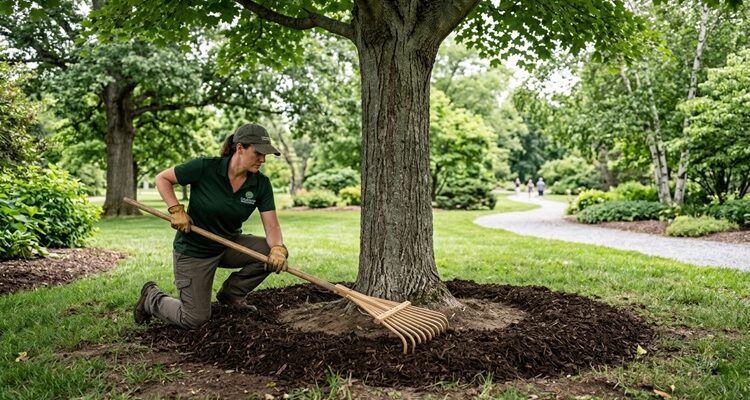
Landscape-induced root damage often goes unnoticed or is misdiagnosed, yet once cut or crushed, roots are never the same. They’re more susceptible to rot, less efficient at taking up water and minerals, and unable to support the tree as it grows. Damaged roots also leave that tree more vulnerable to falling over in a storm.
Table of Contents
Map the root zone before you touch anything
Landscaping is typically designed based on the tree trunk and the edge of the canopy. However, this is not the correct reference point. As much as 90% of a tree’s root system is located in the top 18 to 24 inches of soil. Tree roots also spread 1.5 to 3 times wider than the canopy. So, if a tree has a canopy spread of 20 feet, its roots could be spreading 30 to 60 feet in all directions.
Arborists refer to this as the Critical Root Zone (CRZ), and inside of this zone, at an even closer radius to the tree, is the Structural Root Zone (SRZ), where the main anchoring roots are located. If roots within the SRZ are damaged, the tree is at risk of toppling over.
Therefore, instead of the trunk and canopy edge, you should estimate these two zones based on the edge of the canopy of the tree you want to landscape around. This will give you a more accurate idea of where roots are located. Only then can you properly plan garden beds and hardscape features.
Fence it off before equipment shows up
Once you know where the root zone sits, the next step is keeping people and machinery off it. Tree protection fencing around the CRZ, installed before any trucks, skid steers, or even wheelbarrows arrive on site, is the single most effective thing you can do to prevent damage. It sounds basic. It’s also the step almost everyone skips.
Soil compaction is the quiet killer here. Heavy equipment – and even repeated foot traffic – compresses soil pores and drives out the oxygen that roots need to function. Once soil is compacted, water and gas exchange drop off, and mycorrhizal fungi networks that the tree depends on for nutrient uptake start breaking down. This isn’t something that shows up immediately. It shows up as decline over one to three years, long after everyone’s forgotten the fencing wasn’t there.
If a full fence isn’t practical for the layout of your project, lay down plywood sheets or mulch mats across the root zone to spread weight from any foot or wheel traffic that has to cross it. It’s not as good as keeping the area off-limits entirely, but it’s far better than raw soil under a loaded wheelbarrow all day.
Don’t touch the grade over root zones
Grade changes are one of the most underestimated threats to mature trees, because they don’t look dangerous. Adding four inches of topsoil to level out a yard seems harmless. Removing a few inches to fix drainage seems even more reasonable. Both can suffocate fine new roots that depend on a few inches of loose, friable soil, and the tree may not show it for two or three growing seasons.
If you need to change elevation anywhere near a mature tree, keep that change entirely outside the CRZ and use a retaining wall to hold the new grade exactly at the CRZ. Don’t try to taper it gradually across the root zone – that still buries or exposes roots across a wide area, just more slowly.
Choose the right plants, not just the pretty ones
Deep-rooted annual beds, vegetable gardens, and turf all need regular digging, tilling, or aeration – the exact sort of repeated soil disturbance that mature tree roots can’t handle. Every season you dig into that soil you’re cutting fine roots and disrupting the fungal networks the tree relies on. Shallow-rooted, shade-tolerant understory plants are the better call under an established canopy. They fill the space, they don’t compete aggressively with the tree for water and nutrients, and they don’t demand cultivation that damages root structure year after year. If you want a lawn look, fair enough, but consider whether it’s worth the tradeoff, because turf maintenance under a mature canopy is one of the more common slow-motion causes of decline.
Mulch correctly, or don’t bother
Proper mulching is essential for the health of your trees. When applied correctly, mulch helps maintain soil moisture, regulates soil temperature, controls weeds, and enhances overall soil health. However, over-mulching, also known as volcano mulching, can do more harm than good. This damaging practice occurs when mulch is piled against the tree trunk, eventually leading to moisture retention, trunk decay, and root suffocation.
The correct approach is a 2 to 4 inch layer spread from a few inches away from the trunk out to the drip line. Keep it off the bark entirely. This one habit change prevents two of the more common landscaping-related tree deaths at almost no cost.
Hardscaping over root zones without killing the tree
Patios, pathways, and driveways are often hot zones because concrete not only puts weight on the soil, but it also blocks it from getting the water it needs. Solid concrete over a root zone traps moisture unevenly and blocks the gas exchange roots need to survive. If you absolutely must put a hardscape across a root zone of a tree, permeable pavers, elevated decking, or even crushed stone still allow some water and air to get where they need to go.
But how you put it in also matters. Hand-digging near the tree rather than trenching with machinery costs more in labor, but it also costs less in the life of a tree. You’re doing it in such a way that you’re not cutting roots that are essential to the tree. Soil compaction is your number one killer of large, mature trees.
When root cutting can’t be avoided
Sometimes you have no choice – a root is right in the path of your foundation or your path, and one of the two things is going to give. When you must cut tree roots, the rules are clear: make a clean cut with a sharp implement, don’t cut roots any closer to the tree than necessary (and never cut roots that are more than 2 inches in diameter), and don’t cut roots that are located directly below the trunk. Plus, be careful to keep in mind that you should only cut roots on one side of a tree at a time.
This is also the place where an arborist is called for before, rather than after the cutting has occurred. An arborist can help you establish how much of the root structure of the tree is load-bearing, which roots are okay to cut, and whether you can decide to cut the roots at all without endangering the tree. If cutting roots can be avoided at all costs, place a root barrier to deflect growth away from hardscaping rather than cutting roots after they have become a problem.
When preservation is no longer the responsible choice
Sometimes, no matter how careful you are with planning, a tree just won’t make it in the end. Maybe the damage happened before you owned the property. Maybe a previous grade change or an old driveway installation compromised the root system years before symptoms showed. An arborist assessment might come back with a hard answer: the structural roots are too compromised, the canopy dieback is too advanced, or the tree now poses a real risk of falling.
At that point, removal isn’t a failure of the process – it’s the outcome of taking root health seriously enough to notice the problem before it became an emergency. A tree with a failing structural root zone near a home, driveway, or fence line isn’t a landscaping inconvenience anymore. It’s a hazard. If you’re in that position and need a qualified assessment or the work itself handled properly, a tree removal Northern Beaches team that understands root systems and structural risk can tell you honestly whether removal is actually necessary, and carry it out without creating further damage to everything else growing nearby.
Preserving a mature tree through a landscaping project takes more planning than most people expect going in. Map the roots first, protect them physically, and make deliberate choices about grade, plants, mulch, and hardscaping. Watch the tree for years afterward, not weeks. And when the evidence says the tree’s beyond saving, treat removal as the responsible next step rather than something to put off. Trees that size don’t fail quietly, and waiting rarely makes the decision easier.
Watch for the warning signs over the next few years
Most homeowners get it wrong at this stage: they monitor the tree for a few weeks or months after the work is completed, it looks good, and they assume everything is OK. But root damage doesn’t work that way. Earlier leaf drop in the fall, smaller leaves than normal, a sparse canopy, and dieback in the upper crown are symptoms of root stress that might not become evident for one to three years after the actual damage occurs.
Watering deeply and out across the entire root zone – not right at the trunk – for the first year or two following any landscaping event (even if it’s just a driveway replacement) gives a stressed tree the best chance to regrow the roots it lost. This goes even if nothing looks amiss at the time. Prevention doesn’t end when the crew packs up; it goes on for up to a few years.


Comments